Showing posts with label India. Show all posts

Friday, December 10, 2010

Delhi

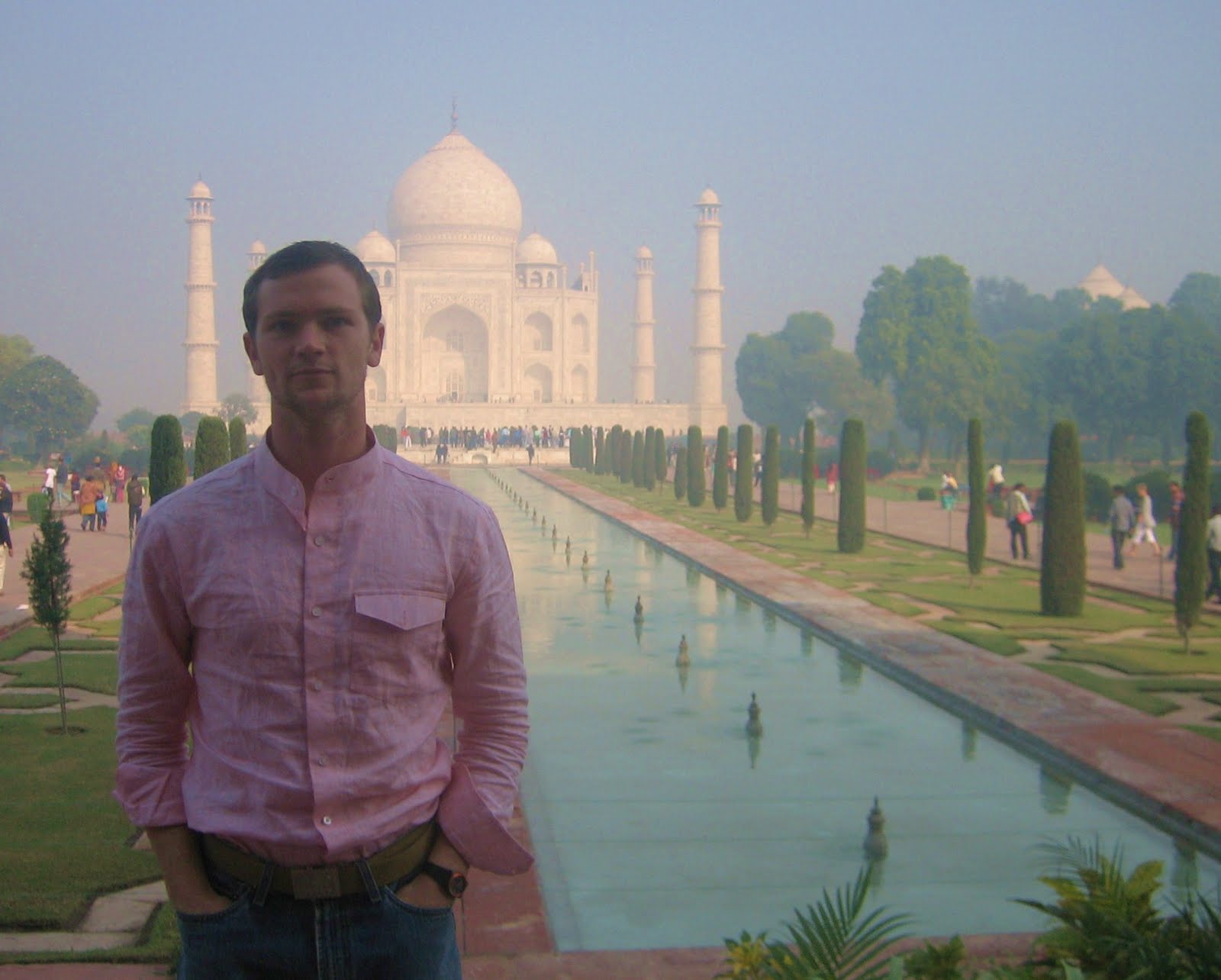
India is not for the casual tourist. I have heard it called the most difficult place in the world to travel and my experiences have yet to suggest otherwise. But for its challenges I can't imagine any place more rewarding.

Four days in Delhi overwhelmed the senses. There are too many places, anecdotes and pieces of history to put into one or ten posts but an introduction to it all.

Christmas came early this year.


Sunday, December 5, 2010

The Tiger of Mysore


When things didn’t work out particularly well for the British in the American War for Independence they turned their attention elsewhere, most notably India. By the 1780s they had extended control over significant portions of the subcontinent but their future subjugation of the country was still very much in doubt.

India was locked in an almost constant state of war between rival states and their European allies – such as the Mughals in the north, The Marathas in the west, the Nizam of Hyderabad in the Deccan and Tipu Sultan of Mysore in the south.

Tipu Sultan was a thorn in Britain’s side. He was young, ambitious, aligned with France and possessed a European trained and equipped army that had already beaten the British in two wars during the 1760s and 80s. The British called him the Tiger of Mysore.

Future British expansion in India meant inevitable conflict with Tipu. Sighting his close ties with France, the British East-India Company convinced parliament to launch a decisive campaign against Mysore in 1789. The final push against Tipu would result in two wars – both resulting in British victories – but the conflicts were hotly contested and featured an incredible cast of characters. Lord Cornwallis, the general that surrendered to Washington at Yorktown, and the future Duke of Wellington, who would later defeat Napoleon at Waterloo, both commanded on the British side.

Since my first visit to India in 2008 and a trip to the Tiger of Mysore’s island fortress, Seringapatam, I have been fascinated with this relatively forgotten moment in history. War elephants, Scottish highlanders rushing over Indian fortress walls, and a sultan called Tiger – this struggle had it all.

Friday, December 3, 2010

Village Market


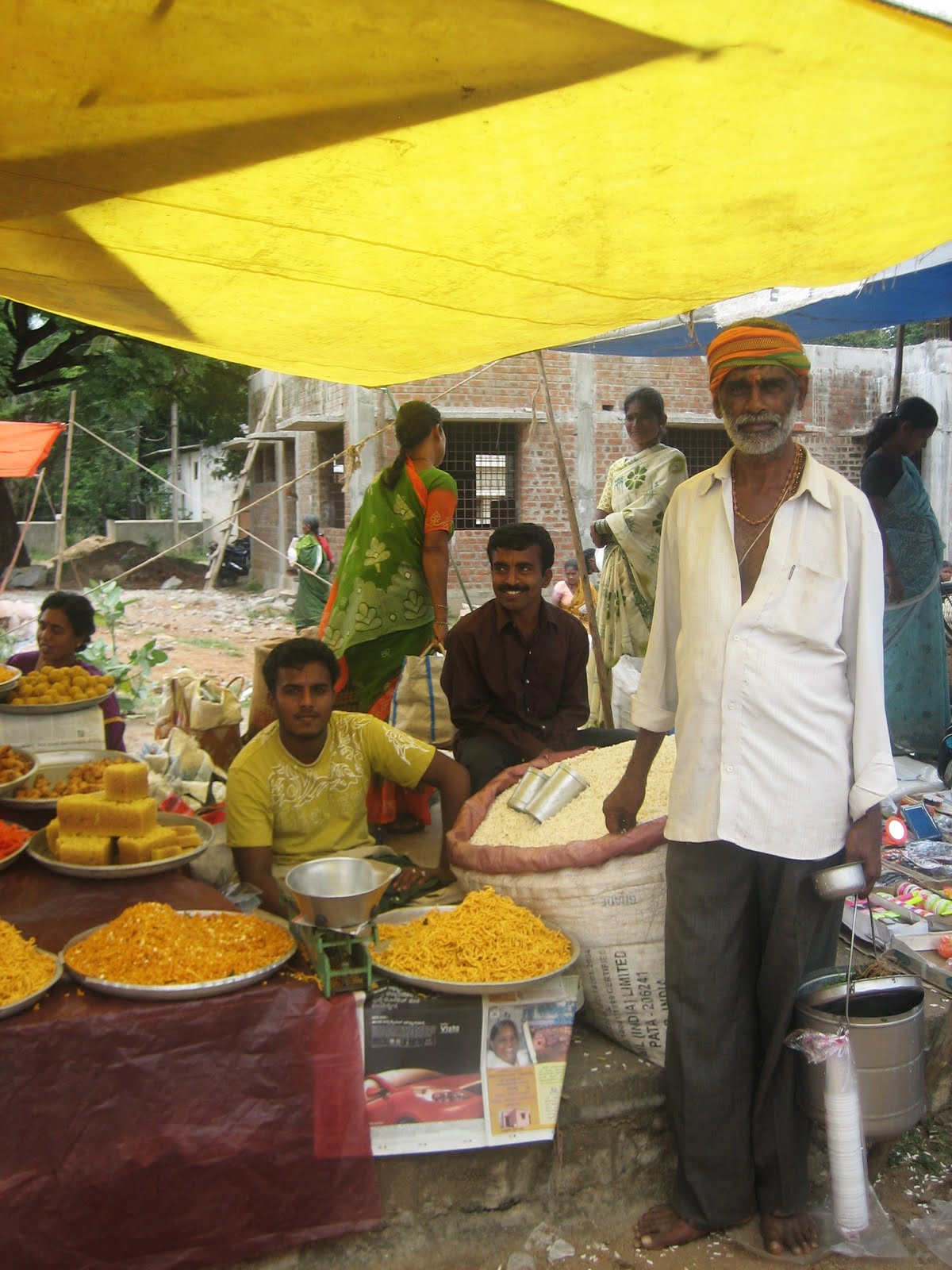
Last weekend I spent two amazing days at a coconut farm five hours outside of Bangalore. There were trips to temples (a post is on its way), beers around the campfire and the village India I had only read about in books.

The countryside, the farm and the villages were beautiful. But, just when I thought the weekend had come to an end, there was one last stop at a local market to top it off.

I couldn’t help but pull out my camera and begin snapping away. I have found that a smile and a thumbs up are a common language not to be underestimated. For a half hour I moved through onion, lentil, ginger, banana and spice tents. I dipped around fashion stands, candy stalls and rope vendors.

After each photo I would spin the camera around and let my subjects see their portraits. I patted backs and laughed with the locals. It was the kind of morning I won’t soon forget.


Friday, November 26, 2010

Chuck Norris or Rajinikanth

There are few Americans unaware of the cult of Chuck Norris. I’m sure you have heard or read the jokes. For example, Chuck Norris’ tears cure cancer, too bad he’s never cried. Or, there is no chin behind Chuck Norris' beard. There is only another fist. Classic stuff, but what you probably aren’t aware of is that India has its very own Chuck Norris – the Tamil film star Rajinikanth.

He's India’s highest paid actor and has a cult-like following here unlike anything I have ever seen before. He also has his own set of Chuck Norris-esque jokes and I’m bombarded with them on a daily basis. A few examples:

Rajinikanth’s calendar goes straight from March 31st to April 2nd, no one fools Rajinikanth.

Once a cobra bit Rajinikanth’s leg. After five days of excruciating pain, the cobra died.

Rajinikanth doesn’t wear a watch. He decides what time it is.

Yeah, it’s pretty much the same stuff but for more read here.

Anyway, not everyone here is sold on Rajinikanth’s talents. I give you my coworker Anand -- great interview buddy.

Tuesday, November 23, 2010

Tuesday Afternoon

It’s Tuesday afternoon at the office and I’m quietly writing web content. Suddenly, what sounds like the Alabama A&M marching band comes rumbling down the street. Fifteen drummers lay down a beat in front of an idol from a local temple. As you can imagine, work comes to an abrupt halt. I would love to tell you it was some kind of special festival or holiday but it’s just India.

Luckily, I had my video camera with me. Enjoy.

Coworker Deepak: Well, they are taking this god on procession. They take around the neighborhood, dip it in water. This one they won’t dip in water. They will put it back in the temple.

Me: Which god is this?

Deepak: (pause) I have no idea.

Me: Well, it’s an important one.

Saturday, November 20, 2010

"Whites on Brown Fields"

At least once a day I do something that an Indian bystander or friend finds to be absolutely puzzling. I often get laughs and a chorus of shaking heads for the things I take pictures of, the places I choose to eat or, quite frequently, for walking when I’m offered a ride.

My friends wouldn’t be caught dead eating from some of the street vendors I frequent. When I explain that I go to the street corner kabob guy partly for the experience, I’m usually met with uncontrollable laughter.

I’m constantly amused with Indian habits but wow do people here love laughing at me. Frankly, they love laughing at the “stupid” things white foreigners do. So in that vein, I noticed an article in today’s Times of India. I give you, “Whites on brown fields,” a slightly mocking look at the new trend in bohemian vacation – volunteering to work on organic Indian farms.

The title of the piece is pure gold but the reaction I got from a few Indians about the substance of the article is even better. I will paraphrase for them. “What idiots, who spends their vacation plowing fields?”

Choice quotes from the piece include:

“Foreigners are all over Indian fields, turning the landscape a lighter shade of brown, and deepening into a darker tint of pink themselves.”

OR

“Consider it a free vacation if you count replenishing the soil, sowing, ploughing, threshing, composting, thatching, milking and so on as holiday sport.”

Now, I don’t want to misrepresent the piece. The majority of it is about the rewards foreigners are getting from the experience but you can’t help but think most Indians see this trend as bit of a novelty. I’m not going to disagree with them, but I do understand the appeal of the farm.

Now, anyone who has spent five minutes with me knows I’m about the polar opposite of the bohemian/hippie type but I think there is a certain romance about a simpler life in the fields. I don’t know if I could spend a year there, or if I could handle tevas and female armpit hair, but the sun on my face, calluses on my hands and a good book instead of the TV doesn’t sound so bad.

Anyway, for more on white people doing stupid things in Indian fields, read here.

Sunday, November 14, 2010

Chris Cooley in Bangalore?

Half dead from an over zealous workout, I walked towards the water fountain and found myself staring at a very familiar face. Coming full sprint right at me was Chris Cooley, in poster form, curly hair and all.

I spun around to share my joy at having a Washington Redskin “in the gym” and quickly realized there wasn’t another soul around who would have any idea who he is. That realization led directly to some obvious questions.

1. How does a poster of Chris Cooley in a Reebok football shirt end up in a gym in Bangalore India?
2. And, if people have no idea who he is, who exactly do they think is in the giant poster?

On a side note, and much to my chagrin, no one in India knows the first thing about American football. It’s been such a desert of football talk for me that one evening I ran into a Nigerian guy wearing a Roy Williams Cowboys jersey (31 – the former safety) and I gave him a hug. Appalling, I know.

But back to the questions. My gym, Fitness First, is a British-based outfit that apparently has some kind of partnership with British-based Reebok. My guess is that a Fitness First marketing exec saw the poster of Cooley, thought he was in fact a burley soccer player wearing a European football shirt, and figured he might as well become a wall decoration in India.

Perhaps of more interest is who exactly Indians think is in the poster. I asked my trainer, Vivin, if he had any idea and with a shrug, gave me an earnest, “no.” He thought it was just some fitness model.

Now, Chris Cooley is without a doubt one of my favorite athletes, but I think even he would laugh a little bit at being called a model. Just look at the poster. In classic Cooley form, he looks half asleep and a little goofy. But the bottom line is this, Chris Cooley can add Indian fitness model to his impressive list of accomplishments – probably right behind pro bowl tight end. (Below, Vivin and Captain Chaos)

Thursday, November 11, 2010

India and Electricity

For the past two weeks, my office has lost power for at least an hour or two almost everyday. As I have been informed, this is common and I better get used to it. While corporations have their own back up units and batteries, my NGO does not. When the power goes, so does productivity, a problem the Indian government is working furiously to fix.

These brownouts piqued my curiosity and I started to wonder exactly how large a challenge India is facing to meet growing energy demand and how exactly the country plans on meeting it.

The numbers, I discovered, are stunning. Today, India has about 165,000 MW of installed generating capacity, of which, more than half comes from coal-fired units. India plans to increase that capacity to 200,000 MW by 2012, a target the government is sure to miss.

Unfortunately, India’s demand for power is projected to reach 400,000 MW by 2020. If there is an acute power shortage now, I’m having a very hard time believing the situation can be remedied in the next 10 years.

While the government has laid out ambitious plans to meet growing demand with a diverse portfolio of energy sources, including massive investments in renewables, nuclear energy and natural gas, India’s carbon emissions will undoubtedly grow – most likely at a stunning rate. To be sure, king coal, and the cheap electricity it provides, isn't going anywhere. (Below, Indian coal miners)


The bleak reality is that India doesn’t have much of a choice. Carbon emissions simply have to be a secondary consideration as the country looks to provide the fuel it needs to maintain 8% GDP growth and bring tens of millions of rural Indians out of crushing poverty.

Consider this, according to India’s 2001 census, roughly 72% of the population lives in rural villages. Only 80% of those villages are connected to the grid and only 52.5% of rural households have access to electricity.

If India’s energy challenges are at all representative of those faced across the developing world, the global effort to tackle climate change and reduce greenhouse-gas emissions will likely be far more difficult than any of us would like to admit – especially those on the left.

Monday, November 8, 2010

The Obamas in India

The President’s visit to India has received an unbelievable amount of media attention here. The Indian press is treating the President’s visit sort of like how CNN and Fox cover animals in distress.

Not surprisingly, the President and First Lady have charmed the nation but the one issue that is understandably a sticking point for many Indians is our support of the Pakistani government.

After three wars and countless border disputes, most Indians cannot imagine Pakistan as anything but their enemy. The terrorist attack in Mumbai two years ago is still a fresh wound for many Indians that generates the same kind of emotions Americans feel when they speak of 9/11.

The President is trying to walk a very fine line as he explains America’s stance towards Pakistan. When asked directly by an Indian college student why he hasn’t condemned Pakistan as a terrorist state, his answer was thoughtful and, in my opinion, on mark.

His point was this. One has to look at Pakistan with nuance. While there is extremism in the country which is festering like a cancer, the Pakistani government has awakened to that danger and is taking steps to address it. We can’t ignore the fact that no country has suffered as much from terrorist attacks as Pakistan. Furthermore, he acknowledged that progress has not been as quick as one might hope, but cooperation with the Pakistani government is in both the U.S. and India’s best interest.

That is a tough pill to swallow for many Indians who firmly believe the Pakistani government supports and sponsors terrorist elements. Of course, history would suggest their assertion carries merit, but a strong Pakistani government that can, and is willing to, weed out extremism is integral to peace in the region.

Indians have been vocal in their response to the President’s remarks on terrorism and Pakistan and I thought it might be interesting for Americans to see some of the letters that have run in The Hindu, one of India’s leading papers.

From The Hindu:

Mr. Obama seems more interested in creating jobs for his countrymen. Time and again, he has avoided calling Pakistan a terrorist country, a fact which is known to the whole world. It is time India stopped looking at the U.S. for support in resolving the Kashmir issue.

M.C. Vijai Shanker,
Chennai

Some sections of the media have rushed to judge Mr. Obama's speech on his arrival on the basis of what he left unsaid. That he visited the Taj Mahal Hotel — a target of the terror attack on 26/11 — is a profound statement on the U.S.' stand on terrorism. We need to be patient and more charitable in our judgment.

Jacob George,
Changanacherry

President Obama's remark that Mumbai is a symbol of the incredible energy and optimism that defines India is indeed a great tribute to the people of the city. Mr. Obama's diplomacy, of not naming Pakistan (itself a victim of many terror strikes), for the 26/11 attack in his address at the Taj Mahal hotel is commendable. India certainly doesn't want any third party to interfere in its affairs with Pakistan or any other nation.

S. Ramakrishnasayee,
Ranipet

Mr. Obama need not condemn Pakistan directly for its involvement in the 26/11 attack. It is for us to bring pressure on the U.S. to stop Pakistan from using its funds to encourage cross-border terror. The lip sympathy extended by Mr. Obama to India on terrorism will remain a mere formality if we fail to get an assurance from him that Pakistan will be reined in.

V.S. Ganeshan,
Bangalore

Thursday, November 4, 2010

The World's Most Expensive Home

India is a country of contrasts. After my first trip to Bangalore I tried my best to paint a picture of 21st century India by describing the ride into the heart of the city from the brand new international airport.

I would talk about the shiny new terminals, marble floors, wonderful new highway but also about passing bullock carts and cows in the middle of the road and seeing entire families of five on top of one motorbike. I would try and describe the physical transformation of the city as well. You might pass a two hundred year old bazaar or temple but then turn a corner to see a brand new 40 story apartment building with a helicopter landing pad on top.

Well, India's evolution is continuing and as the economy liberalizes and grows the gap between the haves and have-nots is becoming painfully obvious. There is no better example of this than the construction of the world's most expensive home in Mumbai.

The home is a 27 story building that casts a looming shadow over some of India's poorest neighborhoods. The one billion dollar edifice can actually be seen from Dharavi, Mumbai's infamous slum containing well over a million people.

A feature on the building in the Times of India does a wonderful job of capturing the grandeur and controversy surrounding the project. A short excerpt from the piece:

"The newest and most exclusive residential tower for this city's superrich is a cantilevered sheath of steel and glass soaring 27 floors into the sky. The parking garage fills six levels. Three helipads are on the roof. There are terraces upon terraces, airborne swimming pools and hanging gardens in a Blade Runner-meets-Babylon edifice overlooking India's most dynamic city.

There are nine elevators, a spa, a 50-seat theater and a grand ballroom. Hundreds of servants and staff are expected to work inside. And now, finally, after several years of planning and construction, the residents are about to move in...All five of them."

Yeah, the feature is worth a read. Enjoy.

Tuesday, November 2, 2010

An Indian Wedding

For all of the fathers out there that complain about the cost of their daughter’s weddings just count your blessings you don’t live in India.

Indian weddings are spectacular. No expense is spared, and it’s common for many families to take out loans to host proper celebrations. A typical wedding seems to be something out of a novel or fairytale – they stretch over several days and will include hundreds of people that travel from all over the country or world for the celebration.

In July of 2011 two of my friends are getting married in Bangalore. He is French and she is the eldest daughter of a very prominent local family. By all indications their wedding is going to be the super bowl of ceremonies.

This past weekend I accompanied them to see the site her father has chosen for the event. Let me begin by saying I had read about the place in guidebooks.

The wedding is taking place at the Bangalore Palace – a replica of England’s Windsor Castle built over several decades in the late 1800s upon 454 acres of manicured grounds.


We arrived in the early evening and the castle was lit up like it was the backdrop of a climatic scene in a Hollywood love story. It’s a moving place and will surely make for an incredible setting for the wedding. It’s also worth mentioning there probably wasn’t another site in the city large enough – they are expecting at least 2,000 people.

Frankly, I can’t wait. This should be the event of the year and there are rumors that the bride and groom will be arriving on elephants. I have got my fingers crossed.

Wednesday, October 27, 2010

Bangalore and Buffalo

I have always found it pretty funny how easily you can get a rise out of folks in the U.S. if you bring up outsourcing and Indian accents on the end of customer support lines (Mom). But to my surprise, you get the same kind of excited responses when you bring up the subject here.

Few Bangaloreans are aware President Obama is winding down the war in Iraq or that he passed healthcare reform, but they all are well aware of his position on reforming American corporate tax structure.

You might recall the line, “our current corporate tax system encourages paying lower taxes if you create a job in Bangalore, India, than if you create one in Buffalo, New York.'' It’s catchy but it has created a firestorm in India.

The President is making an official visit to Delhi on November 5 and as far as Bangalore is concerned the only state issue worth addressing is his stance on outsourcing. This is a position reflected by taxi drivers, waiters, corporate stiffs and seemingly every newspaper.

I suppose this isn’t that surprising considering outsourcing has become almost as synonymous with India as yoga. In fact, outsourcing has provided much, if not the majority, of the fuel for Bangalore’s meteoric rise over the past decade.

IT firms and call centers seem to be on every block and a trip to the outskirts of the city puts the industry’s contribution in perspective. What were once village farms five years ago are now massive IT parks that are the shiny, new homes of tens of thousands of Indian workers.

This outsourcing fiasco – and yes, I am going to call it that – is a wonderful example of the power of words. I’m a card carrying member of the Obama cult but prez you should have known better.

Considering U.S. aims in Pakistan and Afghanistan, and global issues high on the President’s agenda -- such as climate change, the relationship between the U.S. and India has never been more important. The Buffalo/ Bangalore comment should have never happened.

I find it rather depressing that hours of the President’s visit are going to be spent discussing Dell call centers when Muslim extremism in Pakistan, the Kashmir issue and U.S. India cooperation on renewable energy development await well-deserved attention.

Monday, October 25, 2010

Youngistaan

I think everyone would agree using polar bears to sell Coke was a great idea. Having Cindy Crawford take down a cold Pepsi wasn’t half bad either. I would even say Dr. Pepper’s “doctor” commercials, featuring Dr. J and Dr. Love, were solid when they first aired. But, there is a Pepsi commercial here that is simply driving me crazy.

Some ad exec came up with the brilliant idea to invent a country for Pepsi drinkers. In this land, the young and hip chill and drink Pepsi to their heart’s delight. What is the name of this place you ask? It’s Youngistaan; which literally translates to land of the young or young land.


I have a couple problems with Youngistaan.

To begin, this is certainly not the work of Don Draper. Youngistaan is the epitome of our slide into idiocracy. Why do advertisers suddenly feel compelled to event words and now countries to sell their products? Take for example recent beer slogans, “The coldest tasting beer” and “drinkability.” Holy hell Bud Light, “drinkability,” is that really the best you can do?

Youngistaan is drinkability bad. Let’s say nothing about the taste of our beverage but simply attach our label to youth and invent a country while we're at it. For all I know, this ad campaign has been massively successful in India, but if it has, it certainly doesn’t reflect well on India’s consumers.

While I could certainly continue on this critique I want to bring up another point. In an increasingly flat world I think companies have to be aware that their ads designed for one country, or a select demographic, will easily percolate into other markets.

With that in mind, I have to wonder what Bible Belt, rural or redneck America would think of Youngistaan. When Americans think about “stans” we think of Afghanistan and Pakistan – which together are commonly referred to as Jihadistan. Maybe I’m too sensitive about this or I’m reading too much into it, but I can’t help but think Pepsi could have used better word choice.

What I’m getting to is this. After watching these commercials and seeing the Youngistaan slogan literally hundreds of times, I don’t associate Pepsi with hip and youthful culture. Instead, I think about the Taliban setting up IEDs in Afghanistan or indoctrinating a new group of recruits at madrassas in Waziristan.

So, I want to hear from you. What do you think of Youngistaan? How do you think red-state America would react?

Friday, October 22, 2010

Banjo


In India there is Goa and then the rest of the country. That is to say, while modesty seems to be the rule in Bangalore, Goa’s beaches are excess in every conceivable manner. Goa was, up until the 1960s, a Portuguese colony and is probably best described as a slice of Brazil glued onto India’s western coast. But this post is not about one of Goa’s endless nights, this post is about one of Goa’s stray dogs.

Two years ago, on my first trip to India, Chetan Chandra – a brother from another mother – and I spent five days in Goa. We had a fantastic time, stayed in a hotel built on the ramparts of a 16th Century Portuguese Fort and did more riverboat gambling than I need to recount here, but an hour with a stray made the trip.

One afternoon after lunch we decided to walk back to our hotel. We had taken a taxi to the happening stretch of the beach and I don’t think either one of us had realized just how far we had gone.

As we stood outside our restaurant and gazed in the direction of the hotel, we could see a tanker washed up on the beach in the distance and figured it was a maybe a mile or two away. It was our landmark and goal.

As we started the trek, the beach began to slowly empty out and before we knew it, we were alone – except for the company of a few fishermen mending their nets and wandering packs of stray dogs. These dogs were aggressive and would at times move towards us and circle. Trying to keep our calm, we simply kept walking.

After an hour something was very wrong. The ship, that didn’t seem that far away when we started, wasn’t getting all that much closer. We found ourselves caught in an Indo-Portuguese no man’s land inhabited by rabies infested packs of dogs. Just great.

But then he appeared. Our mutt was brown and white, with alert ears and a concerned face. For the next few miles he was our guide. We named him Banjo – it just fit – and he led us forward fearlessly. He tended to stay 20 yards ahead and only slowed down to make sure we were still following. When packs of strays would approach, he would grit his teeth, growl and ward them off. He was simply incredible.

Miles later, as we finally reached the tanker, he was suddenly gone as quickly as he had come. He had drifted behind us to ward off one last pack and, I suppose, sensing we were out of danger, let us go.

This post, at Chetan’s request, is a long overdue thank you note. Banjo, you were one of a kind. I wish you nothing but bacon bits and dozens of pups.